
PCOD AND PCOS: Causes, Symptoms, and Lifestyle Changes | By Harmana

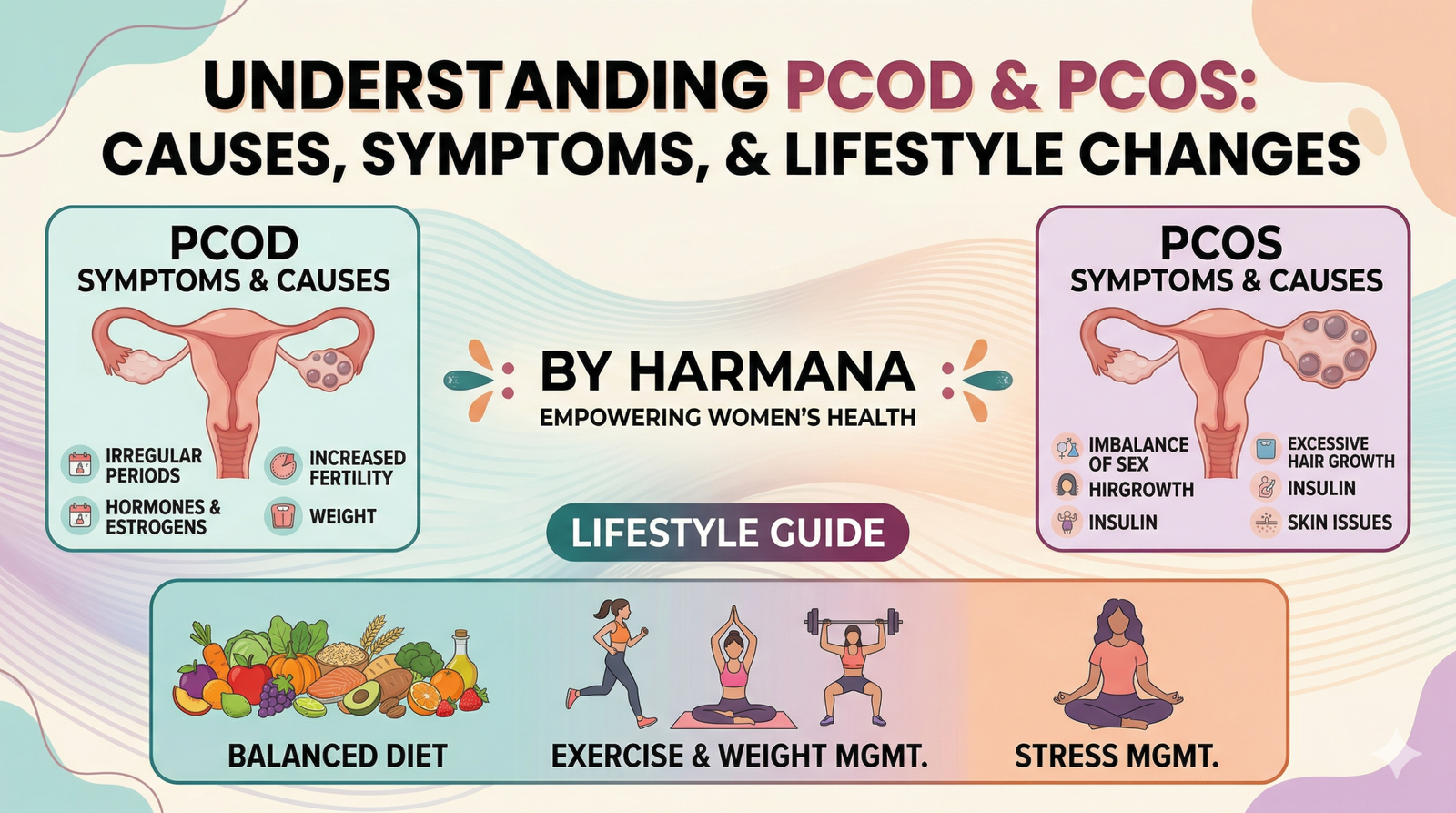
If you are someone who menstruates, or if you have had conversations with people about reproductive health, you have likely heard of the conditions PCOD AND PCOS. However, myths and misinformation surrounding these common health issues are rampant, and the two terms are often incorrectly used interchangeably.
At Harmana, we believe that understanding your body is the first step toward true wellness. Whether you are dealing with unexplained weight gain, irregular periods, or fertility struggles, gaining clarity on your hormonal health is vital. In this comprehensive, deep-dive guide, we will explore everything you need to know about PCOD AND PCOS, including their distinct differences, underlying causes, overlapping symptoms, and the most effective lifestyle changes and treatments available today.
Understanding the Basics: What Are They?
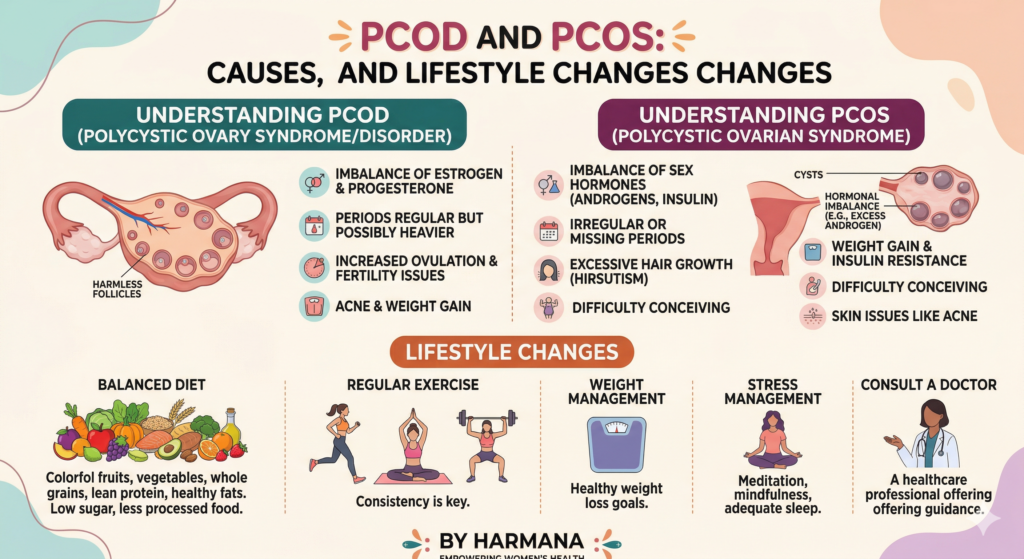
What is PCOD? PCOD stands for Polycystic Ovarian Disease. During a standard menstrual cycle, a woman's two ovaries take turns releasing mature, ready-to-be-fertilized eggs each month. However, in someone with PCOD, the ovaries produce a large number of immature or only partially mature eggs. Over time, these eggs can develop into cysts, which are small sacs filled with liquid. This condition leads to enlarged, swollen ovaries that secrete an excessive amount of androgens, which are male hormones. PCOD is heavily influenced by a combination of genetic tendencies, hormonal imbalances, poor lifestyle, stress, and obesity. Despite its prevalence—affecting about 10% of women globally—PCOD is not generally considered a severe medical disease.
What is PCOS? PCOS stands for Polycystic Ovary Syndrome. It is a much more serious endocrine and metabolic disorder that affects women during their reproductive years (typically between ages 12 and 51) and persists into later stages of life. In PCOS, inappropriate hormonal signaling causes the ovaries to produce abnormally high levels of androgens. Unlike PCOD, where immature eggs are eventually released, the endocrine issues in PCOS cause eggs to become cysts that build up inside the ovaries instead of being released. This leads to abnormal ovulation or a complete lack of ovulation (anovulation), making PCOS a leading cause of infertility globally. An estimated 10% to 13% of reproductive-aged women globally have PCOS, though up to 70% of those affected remain undiagnosed.
The Core Differences Between PCOD AND PCOS
While they sound similar and share overlapping traits, understanding the differences is crucial for proper management:
- Severity and Long-Term Complications: PCOD is generally a milder condition that does not usually result in serious long-term complications. PCOS, however, is a severe metabolic condition that significantly increases the risk of developing metabolic syndrome, type 2 diabetes, high blood pressure, and cardiovascular disease. Furthermore, because ovulation does not take place in PCOS, the uterine lining builds up continuously, which elevates the risk of endometrial hyperplasia and endometrial cancer.
- Impact on Fertility: Both conditions list infertility as a shared side effect, but to vastly different extents. A woman with PCOD can still ovulate and often achieve pregnancy with minimal medical help or extra precautions. Conversely, PCOS involves severe hormonal irregularities that make conception much more complex, often requiring fertility drugs like Clomiphene or advanced treatments like In-Vitro Fertilization (IVF). Additionally, pregnant women with PCOS face higher risks of complications such as premature birth, preeclampsia, or miscarriage.
- Prevalence: PCOD is much more common than PCOS. For example, a study conducted in Southern India and Maharashtra found that 22.5% of menstruating women suffered from PCOD, compared to 9.13% with PCOS.
Uncovering the Causes
The exact root causes of PCOD AND PCOS are not entirely understood, but medical professionals have identified several significant contributing factors:
- Excess Insulin Production: Insulin resistance is a major factor, especially in PCOS. When the body produces excess insulin, it can trigger the ovaries to increase androgen production, which then disrupts the ovulation process.
- Genetics and Heredity: Both conditions run in families. Having a mother or sister with PCOS, or a family history of type 2 diabetes, significantly increases your risk of developing these hormonal disorders.
- Low-Grade Inflammation: Recent studies suggest that women with PCOS often suffer from low-grade inflammation. This inflammation stimulates the production of androgens and can eventually lead to blood vessel or heart complications.
- Stress and Lifestyle Factors: Stress can disrupt the body's hormonal balance by increasing the production of cortisol. High cortisol levels can interfere with the production of estrogen and progesterone, potentially triggering PCOD, particularly after major life events or sudden lifestyle changes.
Recognizing the Symptoms
Because both conditions involve an excess of male hormones (androgens), PCOD AND PCOS produce many overlapping physical and emotional symptoms. If you are affected by either condition, you might experience:
- Menstrual Irregularities: This is often the first noticeable sign. Symptoms include skipped periods (amenorrhea), unpredictable cycles, or excessively heavy and long menstrual bleeding.
- Physical and Weight Changes: Unwanted weight gain is incredibly common, specifically developing belly fat due to male-pattern weight distribution. This weight is notoriously difficult to lose.
- Hair Growth and Loss: You may experience hirsutism, which is excessive, unwanted hair growth on the face, chest, belly, and back. Simultaneously, many women experience hair thinning or male-pattern baldness on the scalp.
- Skin Issues: High androgen levels often cause severe acne on the face, chest, and upper back, as well as excessively oily skin. Another common symptom is skin darkening (hyperpigmentation) around the neck, groin, and under the breasts.
- Associated Complications: Over time, these conditions (especially PCOS) can cause sleep apnea, depression, anxiety, and an increased risk of hypothyroidism (which affects up to 30% of women with PCOS).
Diagnosis: What to Expect at the Doctor
There is a massive amount of social stigma surrounding menstrual health, which often keeps these conditions shrouded in shame and secrecy. At Harmana, we encourage you to break this silence. If you suspect you have PCOD AND PCOS, scheduling an appointment with a gynecologist or endocrinologist is the first step.
To diagnose PCOS, doctors look for the presence of at least two of the following criteria: signs of high androgens (like acne or excess hair), irregular menstrual periods, and polycystic ovaries visible on an ultrasound. Notably, ovarian cysts are not strictly required to be diagnosed with PCOS.
During your appointment, the doctor will likely ask about your menstrual cycle history, whether you have gained weight recently, the severity of your symptoms, and your family's medical history. They may perform a pelvic examination to check your reproductive organs, conduct ultrasound imaging to look at the size of your ovaries and uterine lining, and order blood tests. These blood tests help evaluate fasting lipid profiles, glucose tolerance, and overall hormone levels.
Effective Lifestyle Changes and Treatments
While there is no permanent cure for either condition, PCOD AND PCOS can be effectively managed to restore your quality of life. Treatment usually focuses on managing specific concerns, such as infertility, obesity, or acne, but almost always begins with lifestyle modifications.
1. Dietary Modifications Diet plays a monumental role in managing insulin and androgen levels. It is highly recommended to follow a low-carbohydrate or complex-carbohydrate diet. Harmana advises avoiding sugary and starchy foods like white rice, bread, potatoes, pasta, and beans. Instead, build your meals around high-protein, high-fiber foods. Focus on vegetables that grow above ground, eggs, meat, fish, and natural fats like sunflower seeds, pumpkin seeds, sesame seeds, and natural butter.
2. Weight Management and Exercise Maintaining a healthy body weight—targeting a Body Mass Index (BMI) between 18.5 and 24.9—is one of the most effective treatments. Losing just 5% to 10% of your body weight can significantly reduce insulin levels, lower cholesterol, decrease the risk of heart disease, and help regulate your menstrual cycle. Committing to just 20 minutes of moderate-intensity exercise at least five days a week will help regulate your blood sugar levels, improve ovulation, and keep your weight under control.
3. Medical and Surgical Interventions If lifestyle changes are not enough, doctors may prescribe specific medications. Combined oral contraceptive pills (birth control) containing estrogen and progestin are often used to stabilize the menstrual cycle and reduce acne and excessive hair growth. Additional medications may be given to manage insulin resistance and lower the risks of diabetes and endometrial cancer.
For women trying to conceive, doctors may prescribe fertility medications to induce ovulation. If these prove unsuccessful, In-Vitro Fertilization (IVF) is a highly viable option for those with PCOS. In cases where patients do not respond to hormonal treatments, a second-line therapy known as laparoscopic ovarian drilling may be performed to surgically destroy the androgen-producing tissues in the ovaries.
Breaking the Stigma with Harmana
Living with PCOD AND PCOS is not just a physical battle; it takes a profound toll on mental and emotional well-being. The symptoms of infertility, unwanted body hair, and weight gain often lead to anxiety, depression, negative body image, and a feeling of isolation. In many societies, these highly common disorders are treated as shameful secrets, leading to a lack of proper education and delayed diagnoses.
Global health organizations, including the WHO, are working to enhance public awareness, promote research, and integrate infertility care into national health policies to ensure women receive the help they need without financial hardship.
At Harmana, we stand by the belief that lack of conversation leads to a lack of education. By understanding the profound differences, root causes, and viable treatments for PCOD AND PCOS, you can take proactive steps toward reclaiming your health, your fertility, and your confidence. Remember to always consult with your healthcare provider to tailor a treatment plan that fits your unique body and lifestyle.
What are the common medical tests for PCOD and PCOS?
To accurately diagnose and monitor PCOD and PCOS, doctors typically rely on a combination of physical examinations, blood work, and imaging. The common medical tests include:
- Pelvic Examination: A doctor will physically check your reproductive organs for any masses, growths, or other abnormalities.
- Ultrasound Imaging: This is a crucial test used to examine the size of the ovaries, check for the presence of cysts, and evaluate the thickness of the uterine lining. However, it is important to note that you can be diagnosed with PCOS even if you do not have visible polycystic ovaries on an ultrasound.
- Hormonal Blood Tests: Blood tests are used to check for elevated levels of male hormones, such as testosterone and other androgen steroids, and to verify if normal ovulation is occurring.
- Metabolic and Cardiovascular Blood Tests: Because these conditions are linked to metabolic issues, doctors often order a fasting lipid profile to check total cholesterol, HDL, LDL, and triglyceride levels. Glucose tolerance tests are also routinely performed to evaluate blood sugar levels and check for underlying insulin resistance.
- Thyroid Function Tests: Since up to 30% of women with PCOS also suffer from hypothyroidism, doctors may regularly test your thyroid function to ensure the gland is producing enough hormones.
In addition to these primary diagnostic tests, your healthcare provider may recommend ongoing monitoring of your blood pressure and additional screenings to check for associated complications like obstructive sleep apnea, anxiety, and depression